The Studio
Strijkers Studio responds to a changing world. As companies and institutions redefine their values, ambitions and ways of working, the spatial environment must evolve with them.
Strijkers Studio operates at the intersection of spatial strategy, consultancy and design. We support clients in reformulating their mission and translating it into spatial concepts that strengthen identity, performance and long-term relevance.
Our work focuses on unlocking commercial, social and cultural opportunities — often through the transformation of existing buildings and spaces. We believe in a robust integration of nature, interior and exterior, and in design that is both grounded and future-facing.
Our process extends from strategic exploration and briefing to concept development, design and realization. Strijkers Studio is led by Eline Strijkers.
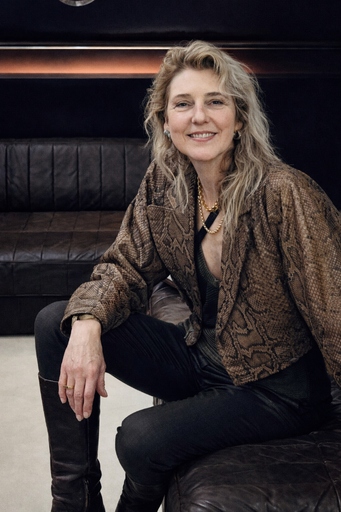
Strijkers Studio operates at the intersection of spatial strategy, consultancy and design. We support clients in reformulating their mission and translating it into spatial concepts that strengthen identity, performance and long-term relevance.
Our work focuses on unlocking commercial, social and cultural opportunities — often through the transformation of existing buildings and spaces. We believe in a robust integration of nature, interior and exterior, and in design that is both grounded and future-facing.
Our process extends from strategic exploration and briefing to concept development, design and realization. Strijkers Studio is led by Eline Strijkers.

Eline Strijkers
Eline Strijkers is an architect, interior architect and the founder of Strijkers Studio. Her practice is rooted in more than three decades of experience in interior design, architecture and spatial strategy.
Over the years, she has developed a sustainable and strategic design approach with a strong focus on transformation, social relevance and the integration of nature.
Eline has worked on a wide range of projects in the Netherlands and abroad — from public buildings and workplaces to retail environments and cultural and commercial spaces. Her approach is careful, investigative and concept-driven, always resulting in an integrated design process with attention to the long-term function and meaning of space.
Over the years, she has developed a sustainable and strategic design approach with a strong focus on transformation, social relevance and the integration of nature.
Eline has worked on a wide range of projects in the Netherlands and abroad — from public buildings and workplaces to retail environments and cultural and commercial spaces. Her approach is careful, investigative and concept-driven, always resulting in an integrated design process with attention to the long-term function and meaning of space.
The Space Between All Scales
I do not view interior architecture as the discipline that begins where architecture ends. Rather, I see it as the discipline that connects all scales of our built environment.
For too long, interior architecture has been reduced to finishing, furnishing, or atmosphere. As if it only becomes relevant once the major spatial decisions have already been made. That view does not do justice to the true meaning and potential of the profession. Especially today, in a time when societal, economic, and ecological issues are becoming increasingly complex, there is a need for a discipline that establishes connections between people, space, use, and identity.
For me, therefore, interior architecture is not a scale, but a way of thinking.
I am convinced that the quality of a space does not arise from a single design discipline, but rather from the encounter between disciplines. That is why I consciously move between interior, architecture, landscape, and strategy. Not because boundaries disappear, but because the most relevant questions are found precisely at those boundaries.
A building never stands alone. It is part of a landscape, a city, an organization, a culture, and an economy. At the same time, the meaning of that building is ultimately determined by the way people experience, use, and identify with it. That is precisely where the field of interior architecture lies.
I am interested in the question of how space influences behavior. How an environment can stimulate well-being. How identity becomes visible. How an organization translates into a physical environment. How a building becomes part of a larger ecosystem. And how all these aspects come together in a spatial experience that is meaningful.
That is why my work almost never begins with form.
My work begins with research.
I investigate the context, the users, the ambitions, the history, the economy, and the future possibilities of a place. I analyze patterns, relationships, and hidden potential. I try to understand which forces shape an environment and what opportunities arise when these forces are connected in a different way.
This investigative attitude forms the basis of my design practice.
I view design not as the creation of objects, but as the development of new possibilities. Sometimes that leads to an interior. Sometimes to a building. Sometimes leading to a strategy, a transformation, a landscape intervention, or a spatial concept that connects different scale levels.
For me, these are not separate tasks.
They are different elaborations of the same question: how do we create meaningful environments in which people can function, meet, learn, work, recover, and develop?
Societal changes play an important role in this. Organizations change. Work changes. Cities change. The relationship between humans and nature changes. Many of the spatial models we have worked with over the past decades no longer automatically meet today's needs.
This calls for new ways of looking.
Not from a predetermined answer, but from an open inquiry into what a place can be.
That is precisely why I believe that interior architecture is a strategic discipline. It is situated close to the user, yet simultaneously influences larger systems. It understands the human scale without losing sight of the broader context. It connects vision with experience, policy with use, and ambition with execution.
In my work, I constantly seek that connection.
Between inside and outside.
Between building and landscape. Between organization and user.
Between economy and well-being.
Between identity and innovation.
Between present and future.
When these connections are missing, spaces often emerge that function well technically but lack meaning. Or spaces that are visually appealing but contribute insufficiently to the ambitions of their users. The greatest challenge lies not in optimizing individual components, but in understanding their interconnectedness.
Therefore, I work from an integrated approach in which analysis, strategy, and design reinforce each other.
I apply this way of thinking not only within design projects. I also offer it independently to clients who require a spatial strategy before a design request even arises.
Many organizations feel that their environment no longer aligns with their ambitions, but do not yet know what spatial consequences this entails. They face questions regarding growth, transformation, sustainability, identity, collaboration, or future-proofing. In such situations, the greatest value often lies not directly in a design, but in developing insight.
Through strategic research, I help organizations redefine the relationship between their mission, their users, and their spatial environment. From these insights emerge direction, choices, and ultimately spatial solutions that are sustainably relevant.
I view this as an essential part of my profession.
Not designing simply because a building needs to be constructed.
But first understanding why a space matters.
In the coming years, the meaning of interior architecture will continue to change. The challenges are becoming larger, more complex, and more intertwined with societal issues. This calls for designers who can connect different worlds and switch between strategy and execution, between research and imagination, between detail and system.
I believe that interior architecture can play a key role in this.
Not as a supporting discipline.
Not as the finishing touch to architecture.
But as an independent discipline that possesses the unique capacity to connect all scales.
That is the position I take.
I work on spaces that not only function well but also tell stories, strengthen identities, inspire people, and move organizations forward. Spaces that emerge from research, strategy, and imagination. Spaces in which architecture, landscape, and interior are not separate worlds, but parts of one coherent whole.
For ultimately, we do not design buildings.
We design the conditions under which people live, work, meet, remember, and dream.
Eline Strijkers
For too long, interior architecture has been reduced to finishing, furnishing, or atmosphere. As if it only becomes relevant once the major spatial decisions have already been made. That view does not do justice to the true meaning and potential of the profession. Especially today, in a time when societal, economic, and ecological issues are becoming increasingly complex, there is a need for a discipline that establishes connections between people, space, use, and identity.
For me, therefore, interior architecture is not a scale, but a way of thinking.
I am convinced that the quality of a space does not arise from a single design discipline, but rather from the encounter between disciplines. That is why I consciously move between interior, architecture, landscape, and strategy. Not because boundaries disappear, but because the most relevant questions are found precisely at those boundaries.
A building never stands alone. It is part of a landscape, a city, an organization, a culture, and an economy. At the same time, the meaning of that building is ultimately determined by the way people experience, use, and identify with it. That is precisely where the field of interior architecture lies.
I am interested in the question of how space influences behavior. How an environment can stimulate well-being. How identity becomes visible. How an organization translates into a physical environment. How a building becomes part of a larger ecosystem. And how all these aspects come together in a spatial experience that is meaningful.
That is why my work almost never begins with form.
My work begins with research.
I investigate the context, the users, the ambitions, the history, the economy, and the future possibilities of a place. I analyze patterns, relationships, and hidden potential. I try to understand which forces shape an environment and what opportunities arise when these forces are connected in a different way.
This investigative attitude forms the basis of my design practice.
I view design not as the creation of objects, but as the development of new possibilities. Sometimes that leads to an interior. Sometimes to a building. Sometimes leading to a strategy, a transformation, a landscape intervention, or a spatial concept that connects different scale levels.
For me, these are not separate tasks.
They are different elaborations of the same question: how do we create meaningful environments in which people can function, meet, learn, work, recover, and develop?
Societal changes play an important role in this. Organizations change. Work changes. Cities change. The relationship between humans and nature changes. Many of the spatial models we have worked with over the past decades no longer automatically meet today's needs.
This calls for new ways of looking.
Not from a predetermined answer, but from an open inquiry into what a place can be.
That is precisely why I believe that interior architecture is a strategic discipline. It is situated close to the user, yet simultaneously influences larger systems. It understands the human scale without losing sight of the broader context. It connects vision with experience, policy with use, and ambition with execution.
In my work, I constantly seek that connection.
Between inside and outside.
Between building and landscape. Between organization and user.
Between economy and well-being.
Between identity and innovation.
Between present and future.
When these connections are missing, spaces often emerge that function well technically but lack meaning. Or spaces that are visually appealing but contribute insufficiently to the ambitions of their users. The greatest challenge lies not in optimizing individual components, but in understanding their interconnectedness.
Therefore, I work from an integrated approach in which analysis, strategy, and design reinforce each other.
I apply this way of thinking not only within design projects. I also offer it independently to clients who require a spatial strategy before a design request even arises.
Many organizations feel that their environment no longer aligns with their ambitions, but do not yet know what spatial consequences this entails. They face questions regarding growth, transformation, sustainability, identity, collaboration, or future-proofing. In such situations, the greatest value often lies not directly in a design, but in developing insight.
Through strategic research, I help organizations redefine the relationship between their mission, their users, and their spatial environment. From these insights emerge direction, choices, and ultimately spatial solutions that are sustainably relevant.
I view this as an essential part of my profession.
Not designing simply because a building needs to be constructed.
But first understanding why a space matters.
In the coming years, the meaning of interior architecture will continue to change. The challenges are becoming larger, more complex, and more intertwined with societal issues. This calls for designers who can connect different worlds and switch between strategy and execution, between research and imagination, between detail and system.
I believe that interior architecture can play a key role in this.
Not as a supporting discipline.
Not as the finishing touch to architecture.
But as an independent discipline that possesses the unique capacity to connect all scales.
That is the position I take.
I work on spaces that not only function well but also tell stories, strengthen identities, inspire people, and move organizations forward. Spaces that emerge from research, strategy, and imagination. Spaces in which architecture, landscape, and interior are not separate worlds, but parts of one coherent whole.
For ultimately, we do not design buildings.
We design the conditions under which people live, work, meet, remember, and dream.
Eline Strijkers
Honors & Awards
Frame Awards, execution award, shortlisted, Celest restaurant and cocktailbar
Almere Architecture Prize (APA), nomination, Food Forum Floriade
Bossche Prize for best big building in the last 5 years, winner, Museum Camp Vught
EU Prize for Contemporary Architecture - Mies van der Rohe Award, winner, Circl ABN AMRO
Frame Best Use Of Light, nomination, Prooff Cologne
Frame Sustainability Award, nomination, Circl ABN AMRO
Frame Trade Fair Stand Of The Year, nomination, Prooff Cologne
German Design Award, nomination, KPN retail
Red Dot Award, honourable mention, winner, KPN retail
Retail Week Interiors Award, nomination, KPN retail
Herengracht Industrie Prijs (H.I.P.), nomination, Lely Campus
Dutch Design Awards, nomination, Stills Flagship Store
Annual Office Space Award by Modern Decoration International Media Prize China, winner, Haka Recycle Office
Dutch Design Awards, nomination, Haka Recycle Office
Great Indoors Award, nomination, Haka Recycle Office
LAi Award, nomination, Haka Recycle Office
Annual Commercial Space Award by Modern Decoration International Media Prize China, winner, SPRMRKT STH
LAi Award, nomination, SPRMRKT STH
LAi Prize, nomination, Lute restaurant
Eline Strijkers
2026 > | Founder Strijkers Studio
2019 > | Co-founder Woodstock Real Estate BV, Rotterdam
2015 > | Co-founder Dutch Windwheel corporation, Rotterdam
2007 > 2025 | Co-founder of Doepel Strijkers, Rotterdam
1999 > 2007 | Founder of Strijkers office, Rotterdam
1994 > 1999 | Interior architect at MVRDV, Rotterdam
Chairman and Jury member
1999 - Present
Chairman and jurymember for Dutch Design Awards Design Research & habitat, LAI prize. Jurymember for Hedy d'Ancona prijs, ARC award, Archiprix, Dezeen awards, Architectenweb awards, Rotterdam Architectuur Prijs
Tutor and visiting critic
1999 - Present
Tutor and visiting critic at Rietveld Academy Amsterdam, Willem de Kooning Rotterdam, Academy of Architecture Rotterdam, TU Delft, Master interior Piet Zwart Institute Rotterdam, Master INSIDE The Hague, Master AKV st Joost Breda
2019 > | Co-founder Woodstock Real Estate BV, Rotterdam
2015 > | Co-founder Dutch Windwheel corporation, Rotterdam
2007 > 2025 | Co-founder of Doepel Strijkers, Rotterdam
1999 > 2007 | Founder of Strijkers office, Rotterdam
1994 > 1999 | Interior architect at MVRDV, Rotterdam
Chairman and Jury member
1999 - Present
Chairman and jurymember for Dutch Design Awards Design Research & habitat, LAI prize. Jurymember for Hedy d'Ancona prijs, ARC award, Archiprix, Dezeen awards, Architectenweb awards, Rotterdam Architectuur Prijs
Tutor and visiting critic
1999 - Present
Tutor and visiting critic at Rietveld Academy Amsterdam, Willem de Kooning Rotterdam, Academy of Architecture Rotterdam, TU Delft, Master interior Piet Zwart Institute Rotterdam, Master INSIDE The Hague, Master AKV st Joost Breda